
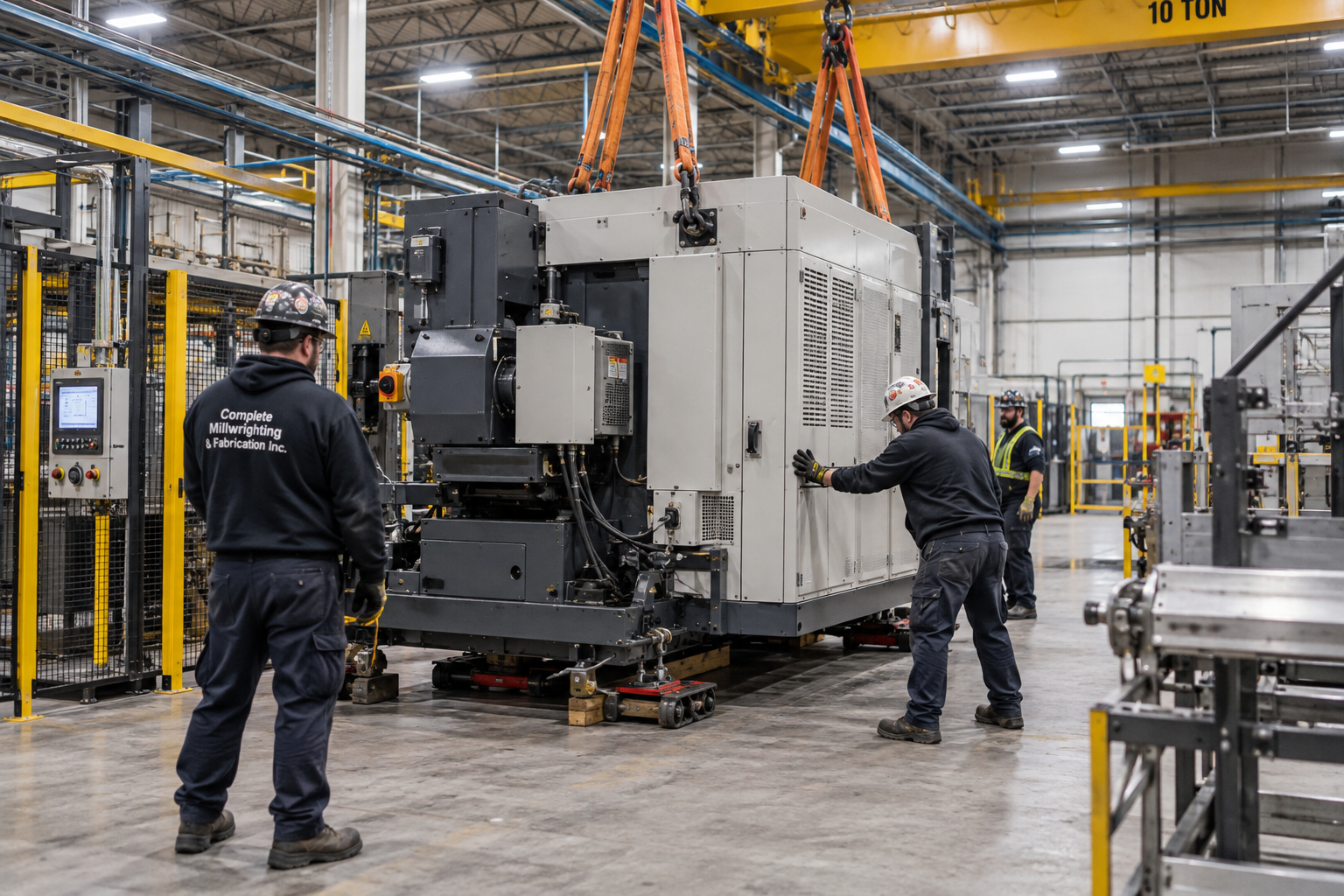
The physical move is only one part of an industrial machinery installation or relocation. Equipment condition, access, disassembly, rigging, destination preparation, utilities, production schedules and final alignment can all determine whether the project proceeds as planned.
Effective industrial machinery installation planning starts before equipment is disconnected or a move date arrives. For projects involving machinery installation and relocation, an early review helps establish what must happen from the initial equipment assessment through positioning, reassembly and mechanical alignment.
Start With the Actual Equipment and Project Scope
A contractor needs more than a machine name and installation date to plan the work. The project team should establish exactly what equipment is involved and what the completed installation needs to accomplish.
Useful information includes equipment type, dimensions, weight, known centre of gravity where applicable, current condition and whether the project involves a new installation or equipment relocation. If drawings, manuals or manufacturer information are available, they may help clarify dimensions, lifting considerations, assembly details and installation requirements.
The scope should also account for auxiliary equipment. Conveyors, guarding, platforms, feeders and other components may need to be removed, moved or repositioned as part of the project.
For machinery relocation planning, the existing condition of the equipment can be particularly important. Components that have been operating together may need to be identified and documented before disassembly so they can be returned to the correct locations during reassembly.
Confirm That the Equipment Can Actually Reach Its Destination
Having enough floor space for a machine does not necessarily mean there is a workable route to its final position. The complete path from the receiving or loading area to the installation point needs to be considered.
Overhead door dimensions, aisle widths, ceiling clearance and loading areas can affect the approach. Inside the facility, existing production equipment, mezzanines, piping, structural elements and other services may restrict movement.
Floor conditions and capacity also need consideration based on the equipment and handling method being used. A route that appears open may not be appropriate for every machine or piece of moving equipment.
The practical question is not simply whether the machine fits once installed. It is whether the machinery and the equipment required to handle it can travel from the entry point to the final position under the actual facility conditions.
Determine What Must Be Disassembled Before the Move
Some industrial equipment cannot be moved through a facility in its operating configuration. Guarding, conveyors, platforms, piping and removable machine components may need to be disconnected or removed before the main equipment can be relocated.
Planning this work in advance helps establish the sequence and identifies which components need to be protected, labelled or stored during the move. Tagging and identification can be particularly useful when multiple similar components must return to specific positions.
Utility disconnects also require coordination. Electrical connections, process piping and other services should be identified early so the appropriate trades can complete their work at the required stage without delaying the machinery move.
Match the Rigging Plan to the Machine and the Facility
Machinery rigging requirements depend on both the equipment and the conditions around it. Equipment weight, balance, approved lifting points, available clearances and the movement route all influence how a machine can be handled.
Depending on the project, industrial rigging and equipment moving may involve machinery skates, forklifts, cranes or other appropriate equipment. Different methods may also be required at different stages of the same move.
The handling plan must account for controlled movement through the facility and final positioning at the destination. This is why machinery rigging should be reviewed against project-specific equipment information and site conditions rather than treated as a standard procedure.
Prepare the Destination Before the Machine Arrives
Moving a machine successfully does not help the schedule if the destination is not ready when it arrives. Destination preparation should therefore be completed or confirmed as part of the installation plan.
Depending on the equipment, this may include foundations or housekeeping pads, anchors and the required machine orientation. Operating clearances should also be checked against surrounding equipment, walls and facility infrastructure.
Maintenance and service access can be just as important as production clearances. A machine may physically fit in a location but still create future problems if technicians cannot access components that require inspection, adjustment or maintenance.
The intended process layout and alignment requirements should also be understood before final positioning. These considerations become more difficult to correct after substantial production equipment has already been set in place.
Identify Every Utility and Process Connection That Must Be Coordinated
Industrial equipment may depend on several facility systems before it can operate. Electrical service, compressed air, process piping, water, drainage, ventilation and product or material-handling connections may all need to be coordinated depending on the machine.
These requirements should be identified before installation begins. Knowing what must be disconnected, modified or connected allows the project team to determine when the appropriate trades need access to the equipment.
Sequencing matters. A mechanical installation can be delayed when another required connection or facility modification has not been completed at the correct stage.
Build the Move Around Production, Not Just the Installation Schedule
Industrial equipment installation rarely happens independently of plant operations. Production schedules, shutdown windows and restart requirements can place firm limits on when work can occur and how long particular stages can take.
Some projects can be completed in phases, while others must fit within a restricted production period. When several crews are involved, the sequence of disconnection, disassembly, equipment moving, installation, utility work and restart preparation needs to be understood in advance.
For projects occurring during planned outages, plant maintenance and shutdown support can form part of the broader coordination effort. The challenge is often not one technically difficult activity, but completing several dependent activities before the fixed restart deadline.
Planning around production helps identify these dependencies before the shutdown begins.
Final Positioning Is Not the End of the Installation
Reaching the destination is an important milestone, but equipment moving and equipment installation are not the same thing. Machinery may still require setting, levelling, mechanical installation, alignment and reassembly after it reaches its intended location.
Removed mechanical components, guarding and auxiliary equipment may also need to be returned to their proper positions. Alignment with adjacent equipment or process components may be necessary before the installation is mechanically ready for subsequent commissioning activities.
These tasks are part of industrial millwright services and should be included when establishing the installation scope and schedule.
Final mechanical requirements are particularly important when equipment relocation involves several connected machines. Positioning one machine without accounting for the alignment and relationship between components can create additional work later in the project.
Bring the Contractor In Before the Installation Date
Complete Millwrighting & Fabrication Inc. can become involved before machinery is disconnected or ready to move. Earlier project review gives our team and the facility’s project personnel time to evaluate equipment information, access, equipment-handling requirements, labour needs, disassembly, destination conditions and sequencing.
This early involvement can also identify where coordination with other trades or production personnel will be required. Addressing those constraints during planning provides more time to resolve them before they affect the installation or relocation schedule.
If you are planning a machinery installation, replacement or relocation in Cambridge or elsewhere within our Ontario service area, Request a Project Review with your equipment information, facility conditions and expected schedule so the project requirements can be reviewed before the planned work date.